Thinking about buying a Seminole Heights bungalow and letting the property help pay for itself? It is a smart idea, but in this part of Tampa, the details matter more than the buzzword. If you want to house hack the right way, you need a plan that matches local zoning, historic rules, financing options, and the layout of the home itself. Let’s dive in.
Why Seminole Heights fits house hacking
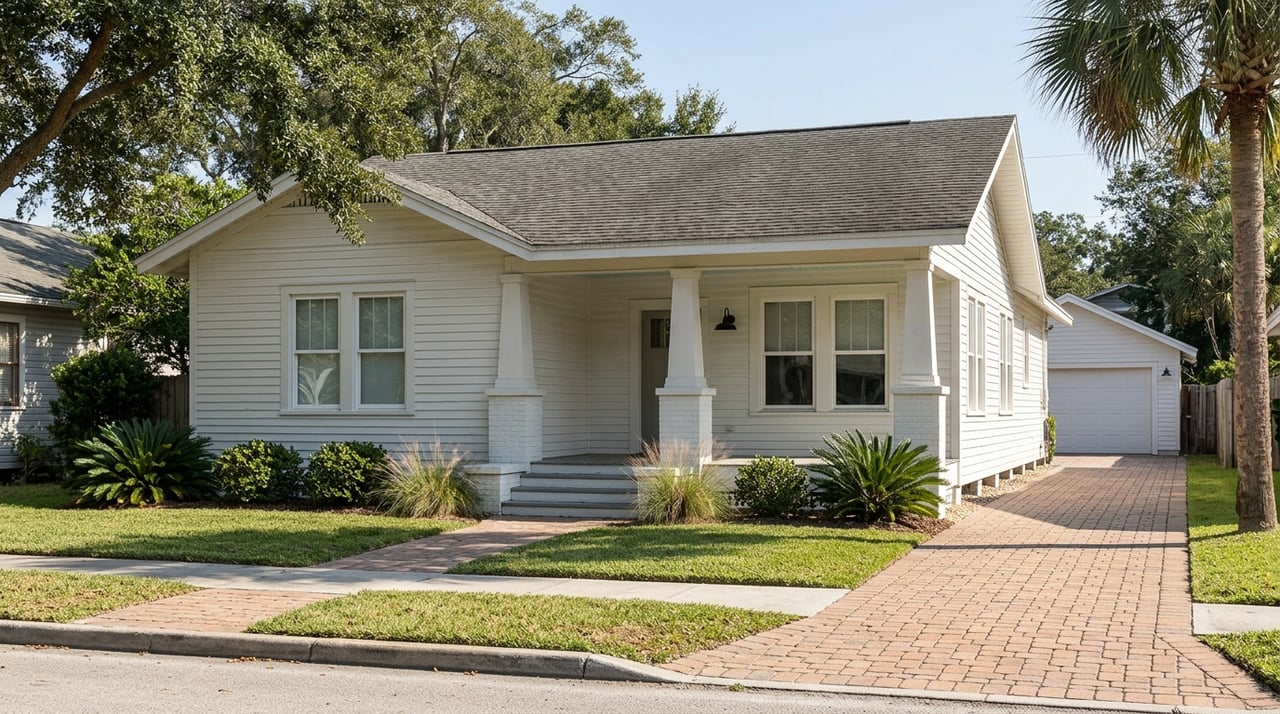
Seminole Heights has many of the ingredients that make house hacking appealing. The City of Tampa describes Old Seminole Heights as a tree-shaded community known for early-1900s bungalows, and some homes sit within National Register and local historic districts. That mix of character, owner-occupancy, and varied housing stock can create opportunities for buyers who want to live in the home and offset costs.
The broader 33604 area also shows signs of a flexible household market. Census-based ZIP code data reports 40,055 residents, a median age of 36.3, 2.5 persons per household, and 15.6% of residents moving within the prior year. That does not guarantee rental demand, but it does suggest a neighborhood where roommate-style living can make sense.
Market numbers also point to a meaningful spread between home prices and rents, although the data should be treated as directional. Zillow reports a 33604 average home value of $322,939, a median sale price of $324,167, and homes going pending in about 29 days. Realtor.com reports Old Seminole Heights with a median listing price of $452,500, a median rental price of $2,300, 77 active rental listings, and 15% year-over-year rent growth.
Start with the cleanest strategy
In Seminole Heights, the simplest house hack is usually the best one. For most buyers, that means either renting a room in the main house or buying a property with a legal accessory dwelling setup already in place. Those paths are often more practical than trying to force a bungalow into a duplex plan.
That matters because local rules in Greater Seminole Heights are parcel-specific. Tampa’s zoning framework includes several subdistricts, including SH-RS, SH-RS-A, SH-RM, SH-RO, SH-CN, SH-CG, SH-CI, and SH-PD. Two homes on nearby blocks can have very different zoning outcomes, so you cannot assume the same house-hacking plan works everywhere.
Roommate house hacking in a bungalow
For many buyers, a roommate setup is the most direct path. You live in the home as your primary residence and rent out one or more bedrooms, while still using the property as a single-family home. In a neighborhood filled with older bungalows, this can be a practical way to keep your housing payment more manageable without triggering the complexity of a structural conversion.
Financing may support this strategy, but only if you ask the right questions early. Fannie Mae says some loan programs can recognize boarder income, and HomeReady is designed for principal-residence buyers with down payments as low as 3% and flexibility for income sources such as rental payments or boarder income. The important part is that these rules are program-specific, so your lender needs to confirm whether roommate income can count and what documentation is required.
When you tour homes, think beyond charm. Ask whether the floor plan gives enough privacy for shared living, whether there is more than one bathroom, and whether entrances and parking make day-to-day life easier. In many Seminole Heights bungalows, the layout will tell you quickly whether the property works as a comfortable shared home.
What to ask your lender
Before you write an offer, ask questions like these:
- Is this loan program compatible with owner-occupied house hacking?
- Can roommate or boarder income be used to help qualify?
- If yes, what documentation is needed?
- Does the property need a certain layout or appraisal treatment?
- If there is an existing accessory unit, can its rent be counted?
Getting those answers early can save you from building a budget around income your lender will not use.
ADUs can work in Seminole Heights
Accessory dwelling units, or ADUs, are especially relevant here because Tampa specifically allows ADUs in Seminole Heights. The city also notes that the main residence must be owner-occupied. That makes ADUs a natural fit for buyers who want to live on-site while creating a separate rental space.
Tampa’s Seminole Heights ADU guide includes supplemental standards you need to understand before you buy. Accessory-building size is capped at 15% of lot area, up to 950 square feet, and height limits also apply. Those rules mean that even if an ADU is allowed in principle, the lot still has to support it physically.
This is where lot shape, setbacks, and existing improvements matter. A deep backyard may look promising, but protected trees, access issues, or prior structures can limit what you can actually build. In older Seminole Heights lots, feasibility is often just as important as zoning permission.
Existing ADU vs. future ADU
There is a big difference between buying a home with a legal, existing ADU and buying a home where you hope to add one later.
| Option | What it can offer | What to verify |
|---|---|---|
| Existing ADU | Faster path to rental income | Permits, legal status, owner-occupancy requirements, lender treatment |
| Future ADU | More control over design and use | Zoning, lot limits, historic review, tree rules, build costs |
If you are choosing between the two, an existing permitted setup usually carries less uncertainty.
Duplex conversions need caution
A lot of buyers hear “house hack” and picture turning a bungalow into a duplex. In Seminole Heights, that should never be your default assumption. Tampa’s 2025 land development code assessment says there is limited opportunity for by-right two-family development and no by-right provisions for three- or four-unit buildings in the most prevalent zoning districts.
That does not mean a duplex-style plan is impossible on every parcel. It does mean the idea belongs in the due diligence bucket, not in your base budget. If a property only works for you after a major zoning or use change, you need to treat that as a higher-risk strategy.
Historic rules can change the plan
Seminole Heights is not just a neighborhood with older homes. Parts of it are within a local historic district, and that can directly affect your renovation timeline and project scope. The City of Tampa says the Architectural Review Commission uses Seminole Heights design guidelines when reviewing construction activities in the district.
The city also states that Certificates of Appropriateness are required for new construction, additions, and exterior repairs. If your house-hack plan involves an ADU, an addition, a porch enclosure, or another exterior change, historic review may come before your permit process is complete. That extra layer is manageable, but you need to know it before you close.
Trees and site constraints matter too
On older bungalow lots, the challenge is not always whether a use is allowed. Sometimes the real issue is whether the site can accommodate the work. Tampa’s district standards require compliance with tree preservation and landscaping rules, including preserving, relocating, or removing protected and grand trees under city code.
That can affect where you place an addition, whether a backyard unit fits, and how much usable yard remains. In Seminole Heights, beautiful mature trees are part of the appeal, but they can also shape what is possible.
Run the numbers with real-world assumptions
A smart house hack works on paper before it works in real life. That means using conservative rent assumptions, realistic repair budgets, and a financing plan your lender has already discussed with you. It also means separating what is legal today from what might be possible later.
Because Seminole Heights price and rent data come from different geographies and methodologies, use them as directional benchmarks rather than exact forecasting tools. If homes in the wider 33604 ZIP are around the low $300,000s by one measure, while Old Seminole Heights listings and rents trend higher by another, your target block and property type matter a lot. A restored bungalow with an income setup is not priced the same way as a basic single-family home without one.
Do not skip the tax conversation
Once part of your home becomes a rental, taxes get more layered. IRS Publication 527 says residential rental income and expenses are generally reported on Schedule E. It also says that if only part of the property is rented, expenses must be divided between personal and rental use.
That means your CPA should help you think through expense allocation, depreciation, and the line between repairs and improvements. The same publication notes that depreciation begins when property is placed in service for rental use. If you are buying with a house-hack plan in mind, this is worth discussing before tax season arrives.
A smart Seminole Heights buying checklist
If you want to house hack a bungalow the smart way, focus on these checkpoints before you buy:
- Confirm the exact zoning subdistrict for the parcel
- Verify whether your strategy is roommate-based, ADU-based, or something more complex
- Ask your lender which income sources may count for qualification
- Check whether an existing ADU is permitted and legal
- Confirm whether the property is in a local historic district
- Review whether exterior work may need a Certificate of Appropriateness
- Evaluate tree constraints and backyard buildability
- Run conservative rent and repair numbers
- Talk with a CPA about rental reporting and expense allocation
This kind of due diligence is where many good deals are won or lost.
The smartest path is usually the simplest
In Seminole Heights, the cleanest house-hack plan is usually a legal roommate setup or a properly permitted ADU. Those strategies align more naturally with the neighborhood’s housing stock and Tampa’s current rules. A duplex-style conversion may work on some parcels, but it should be treated as a case-by-case opportunity, not a neighborhood-wide shortcut.
If you want to buy a bungalow with income potential, local knowledge matters. Seminole Heights can reward buyers who understand historic homes, zoning details, and the difference between a creative idea and a workable plan. For tailored guidance on finding a property that fits your goals, connect with Harvey Petty.
FAQs
Can you legally build an ADU in Seminole Heights?
- Yes. Tampa says ADUs are allowed in Seminole Heights, but the main residence must be owner-occupied and supplemental size and height standards apply.
Can roommate income help you qualify for a Seminole Heights home?
- Sometimes. Fannie Mae says some programs may allow boarder income or rental income in certain situations, but your lender must confirm whether your specific loan program allows it.
Is converting a Seminole Heights bungalow into a duplex easy?
- No. Tampa’s current code framework means duplex-style plans are parcel-specific and should be treated as a detailed zoning and due diligence question.
Do historic district rules affect house hacking in Seminole Heights?
- Yes. If the property is in a local historic district, exterior changes such as additions, porch enclosures, or new structures may require review and a Certificate of Appropriateness.
What tax issues come with house hacking a Seminole Heights property?
- If you rent part of the property, you may need to report rental income and divide expenses between personal and rental use. A CPA can help you apply those rules correctly.
What is the safest house-hacking strategy in Seminole Heights?
- In many cases, the safest route is a legal roommate arrangement or a properly permitted ADU, since those options usually fit local rules more cleanly than a duplex conversion.