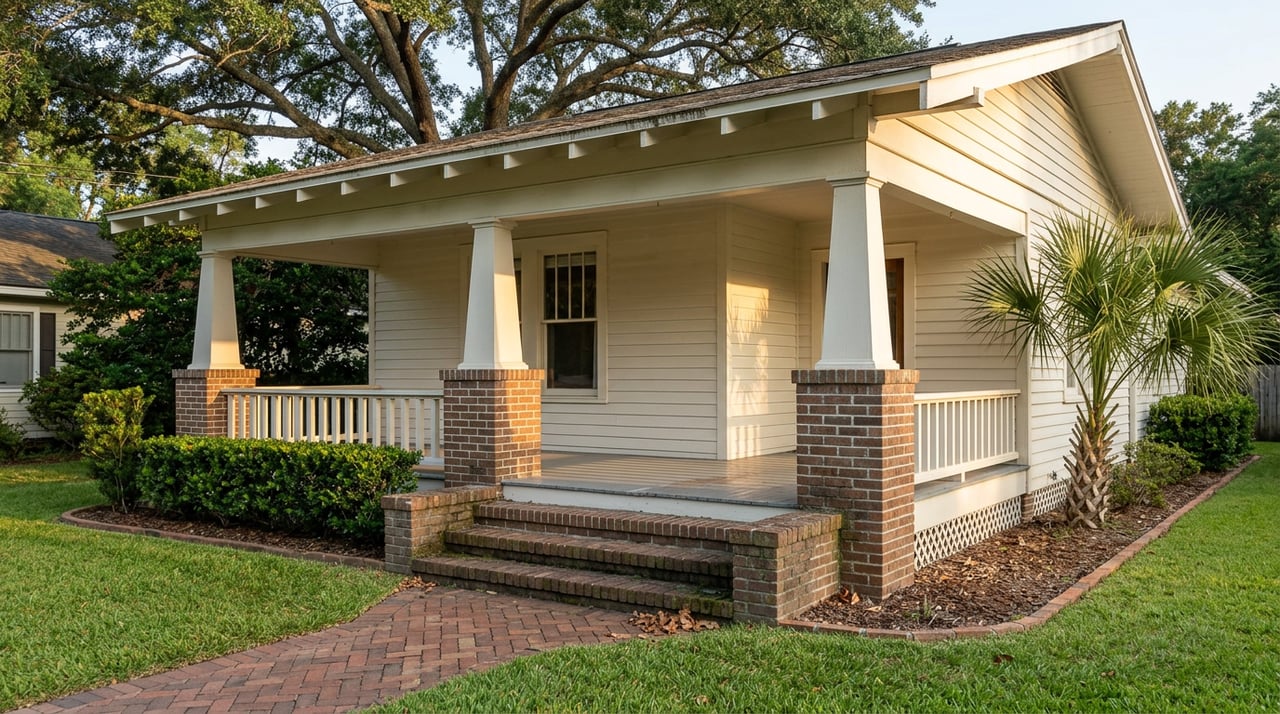
A buyer tours a 1920s bungalow on a Saturday, falls for the original heart pine floors and the deep front porch, and has an accepted offer by Monday. In Seminole Heights, that accepted offer is rarely where the real negotiation happens. It happens two to three weeks later, when the buyer's insurance agent and the home inspector deliver their findings on the same afternoon, and a sale that looked finished suddenly isn't.
The house didn't change. The buyer's mortgage approval didn't change. What changed is that an underwriter somewhere read the word "knob-and-tube" or "Federal Pacific" on an inspection report and declined to write a policy, or quoted one so high it broke the buyer's debt-to-income math. No insurance, no mortgage. No mortgage, no closing. In a neighborhood built almost entirely between the 1910s and 1930s, that single fact does more to decide which deals survive than curb appeal, staging, or even list price.
Why the Age of the House Outweighs the Price of the House
Seminole Heights was platted in 1911 as one of Tampa's original streetcar suburbs, and its housing stock still shows it. The design guidelines the city uses to review changes in the historic district describe the neighborhood's core as five-room bungalows built on paired lots during the 1910s and 1920s, many drawn from bungalow catalogs of the era rather than custom architectural plans. Local builders like R. Jackson Youngblood put up several of the houses still standing on Suwanee and Idlewild avenues, and prefabricated kit brands such as HonorBilt, Standard Built, and Quickbilt supplied others. It's a neighborhood where the bones of the house are frequently older than the grandparents of the person buying it.
That vintage is exactly what an insurance underwriter is trained to flag. A home built before the 1950s often still carries some of its original knob-and-tube wiring, a cloth-insulated, ungrounded system that Florida's insurer of last resort effectively won't cover while it's still live. Electrical panels from that era get replaced over the decades, but not always with anything better. Panel brands like Federal Pacific and Zinsco show up often enough in older Tampa homes that insurers treat them as an automatic red flag, right alongside galvanized plumbing that's past its service life. None of these issues show up in a listing photo. All of them show up in a four-point inspection, the standard document Florida insurers use to decide whether an older home is worth writing a policy on at all.
What an Underwriter Actually Checks Against a 1920s Bungalow
| System | What insurers flag | Why it bites in Seminole Heights specifically |
|---|---|---|
| Electrical panel | Federal Pacific, Zinsco, active knob-and-tube | Original panels and wiring are still common in un-updated bungalows |
| Roof | Age past the carrier's cutoff, commonly cited as 15 years | Many original roofs have been replaced once, not twice, since the 1990s |
| Plumbing | Galvanized supply lines | Original plumbing runs are frequently untouched behind plaster walls |
| Claims history | Prior water or wind claims on file with the CLUE database | Follows the house, not the seller, and surfaces during underwriting regardless of who's selling |
A seller can repaint, restage, and even re-landscape a bungalow and still lose the deal at this stage, because none of that touches the roof age or the panel brand an underwriter is scoring against. Florida carriers in 2026 are also less willing to bind a policy on the promise of a future repair. Where a buyer might once have gotten 30 or 60 days after closing to swap out an old panel, more carriers now want the fix done before the policy is written, which pushes the repair back into the negotiation instead of after it.
There's a practical way to get ahead of this instead of finding out at week three. A wind mitigation inspection, which runs $150 to $300 and evaluates roof shape, roof-deck attachment, and opening protection, can cut a wind premium by 20 to 40 percent and gives a seller something concrete to hand a nervous buyer before the topic even comes up. Sellers who get one done ahead of listing, along with a pre-quote from an independent insurance agent, walk into negotiations with proof the home is insurable rather than a promise.
The Other Approval Most Out-of-State Buyers Have Never Heard Of
Insurance is the friction that shows up after contract. The second one shows up after closing, when a new owner wants to change something about the house itself. Seminole Heights sits inside a City of Tampa local historic district, which means exterior work on a contributing structure, a new porch railing, replacement windows, an addition, a paint color on masonry, requires a Certificate of Appropriateness from the city's Architectural Review Commission before a contractor can pull a permit. Staff can approve smaller requests directly; larger ones go to a public hearing.
The distinction that saves most bungalow owners a headache is that this review only applies to the exterior. A kitchen remodel, a bathroom gut, new HVAC, none of it triggers ARC review as long as the work stays inside the walls. A buyer moving from a subdivision built in 2015 rarely knows this distinction exists until they're mid-renovation and a contractor mentions it. Knowing it going in changes how a buyer plans a renovation budget and timeline, since exterior projects need the Certificate of Appropriateness built into the schedule from day one, while interior work can move as fast as a contractor's calendar allows.
Before You Write or Accept an Offer in Seminole Heights
- Sellers: get a wind mitigation inspection and an insurance pre-quote before listing. It turns a future objection into a number you can show a buyer up front.
- Buyers: ask for the panel brand and wiring type during the inspection period, not after. A Federal Pacific panel or live knob-and-tube isn't a deal killer, but it needs pricing into the offer before you're locked into a closing date.
- Check whether your renovation plans touch the exterior. If they do, budget time for a Certificate of Appropriateness. If they're strictly interior, that step doesn't apply.
- Pull the CLUE history if you're the seller. A prior water or wind claim will surface during the buyer's underwriting whether you disclose it or not, so it's better to know what a buyer's agent will find before they find it.
A Few Questions Worth Asking Early
Does every renovation in Seminole Heights need historic district approval? No. Only exterior changes to a contributing structure need a Certificate of Appropriateness from the Architectural Review Commission. Interior kitchen and bath remodels are exempt from that review.
Can a house with knob-and-tube wiring still get insured? Sometimes, but coverage is inconsistent across carriers, and most insurers want the wiring inactive or replaced before they'll bind a policy. It's worth pricing an electrician's quote into your offer rather than assuming a carrier will work around it.
Does a fast accepted offer mean the sale is close to done? Not in this neighborhood. A quick accepted offer only means the buyer liked the house. In a housing stock built almost entirely before 1940, the insurance and inspection findings that arrive two to three weeks later decide far more about whether the sale actually closes.
A hundred-year-old bungalow is still one of the best reasons to live in Seminole Heights, original woodwork, deep porches, and a walkable grid that newer subdivisions can't replicate. Buying or selling one well just means running the insurance and historic district math before the appraisal, not after. That's the kind of groundwork that comes from having closed these deals before, not from reading a listing sheet.
If you're weighing a bungalow purchase or getting ready to list one in Seminole Heights, Harvey Petty can walk you through the insurance and historic district steps before they become a surprise at week three. Reach out for a conversation about your specific property and timeline.