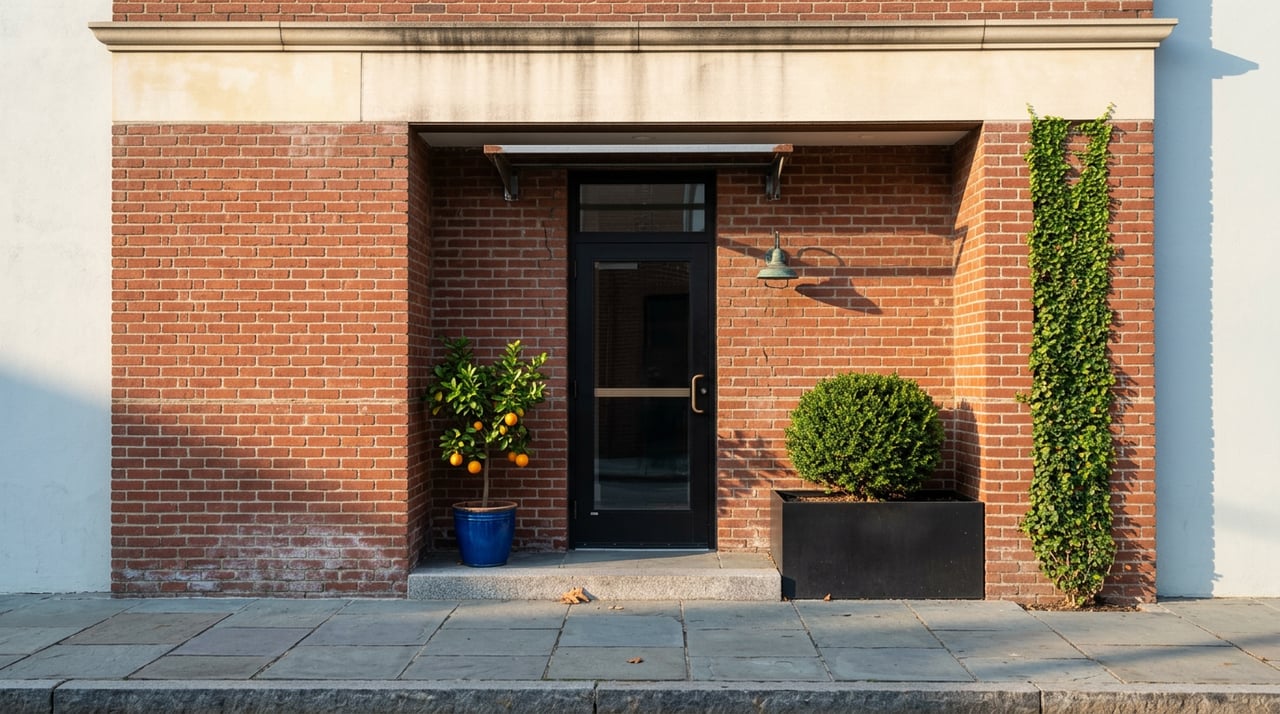
Walk the 900 block of Central Avenue on a weekday morning and you pass a paint studio that still smells faintly of primer, a pasta counter rolling dough behind glass, and a storefront with brown paper taped over the windows while a crew pulls permits inside. None of those three doors looked anything like this a year ago. One was a ramen bar that had been open since 2016. One was a travel agency. One sat empty for close to two years after a fried chicken shop closed.
Ask a downtown resident what changed on Central Avenue this year and most will point toward Central Park, the five-story food hall a few blocks east, or Forbici's new dining room at Sundial. Both are real and both are worth the walk. But neither is actually the fastest-moving story on the street. The three storefronts between 905 and 911 Central Avenue swapped tenants, cuisines, and entire business categories inside of twelve months, while the anchor projects everyone talks about were still finishing construction they had started years earlier.
Three doors, one lease cycle
Start at 911 Central Avenue. Buya Ramen opened there in 2016 and spent nine years building a following for a style of izakaya dining that most St. Pete diners hadn't encountered before it arrived. The restaurant closed in August 2025. By this summer, Shaka Shrimp Kitchen had signed a lease for the same address, a fast-casual concept built around shrimp preparations and ahi tuna bowls, with co-owner Ronan McCaffrey telling St. Pete Rising the team saw a gap downtown for chef-driven food served quickly. Permits were expected to clear this summer, with construction to follow and an opening targeted before the end of the year.
Move two doors down to 905 Central Avenue, where Nash's Hot Chicken had left a roughly 700-square-foot space vacant for nearly two years. Fusillo Italian Pasta took it over, opening in late winter 2026 after co-owners Alessandro Casali and Giangiacomo Greco, both lifelong friends from Italy, decided St. Pete beat out Miami as a first location. Casali put it plainly when he told St. Pete Rising why they chose this particular block: they loved the vibe, the people, and how much Central Avenue, especially the EDGE District, was growing.
Between the two, at 909 Central Avenue, a former Expedia Cruises office became Sunshine City Paint, a paint-and-sip lounge owner Julie Gioscio targeted for an early June soft opening. She described wanting to build a place for connection in a neighborhood where she hadn't had that when she first moved in.
So in the space of about a year, a nine-year restaurant, a long-vacant fried chicken storefront, and a travel agency became a shrimp counter, a pasta shop, and a paint studio, three consecutive addresses on the same block.
The six-year timeline a few blocks over
Compare that pace to what's happening at the anchor projects. Central Park St. Pete, the five-story food hall at 551 Central Avenue, occupies the former Dome Grill and, before that, a 100-year-old Woolworth building. Construction stretched across roughly six years of delays from the pandemic, hurricanes, and structural work on that century-old shell. The project finally began a phased opening on February 19, 2026, starting with takeout-only service from two concepts. By this August, the food hall level has reached what its own site and current listings describe as fully open, with seven concepts now running, including Palm Avenue Deli, Constellation Burger, and Kojo Wok.
Forbici Modern Italian tells a similar story on a smaller scale. The restaurant, an offshoot of the Hyde Park original that opened in 2019, spent nearly three years in planning and construction before debuting at Sundial on June 24, 2026, in the second-floor space Sea Salt vacated at the end of 2024 after almost a decade in business. The buildout runs 12,000 square feet with seating for 350, floor-to-ceiling windows, and multiple bars, the kind of project that simply takes longer because it involves more than swapping a sign out front.
Casa Origen sits somewhere in between. The farm-to-table concept is taking over the former No Vacancy space at 937 Central Avenue, a retro bar that closed in 2025 after a six-year run. As of this spring, construction was underway with an opening targeted for this summer, longer than a simple storefront swap because a bar has to become a working kitchen, but far shorter than a five-story food hall built inside a century-old structure.
"When we came to St. Pete, we immediately loved the vibe, the people, and how much Central Avenue, especially the EDGE District, is growing."
That's Casali talking about Fusillo's decision to land on this exact block. It's also, without meaning to be, the clearest explanation for why some storefronts turn over in months while others take years. The difference isn't demand. It's what has to be torn out before anything new can go in.
What the block actually tells you
If you've watched a "coming soon" sign sit in a downtown window for what feels like forever, here's the pattern: the storefronts that move fast are almost always the ones with existing kitchens, existing plumbing, existing bones. A ramen bar becomes a shrimp counter in a matter of months because the grease trap and the walk-in cooler are already there. A travel agency becomes a paint studio even faster, since neither one needs a commercial kitchen at all. The projects that stretch for years are the ones tearing into structure, adding floors, or converting a building that was never a restaurant to begin with. Central Park needed six years partly because it was excavating a basement under a hundred-year-old building. Forbici needed three years because a 12,000-square-foot second-floor buildout with a new patio and multiple bars is a different scale of project than swapping a storefront sign.
None of that shows up in a headline about a grand opening. It shows up if you walk the block and pay attention to which spaces changed hands quietly and which ones have had a fence around them since last year.
The weekend that wasn't on last August's calendar
The same pattern of fast versus slow shows up in what's happening on the calendar this month. Downtown St. Pete has never hosted anything like the Joke Wrld Comedy Festival, a two-day event landing August 14 and 15 across five stages in the downtown core and the Warehouse Arts District. Organizers built the whole thing around venues that already exist, Coastal Creative as festival headquarters, plus The Floridian Social, Steep Station, Spitfire Comedy House, and Campbell Park, connected by a free trolley shuttling attendees between stops from 1 p.m. to midnight both days. It's the first live festival from Joke WRLD, a comedy platform that built an audience of more than 760,000 subscribers online before ever staging an in-person event downtown, and organizers picked this stretch of downtown specifically because its venues sit close enough together to walk a multi-stage lineup in a single weekend.
That's the fast-turnover model applied to an event instead of a storefront. No new construction, no years of permitting, just a festival stitched together across rooms that were already doing their own thing on a Friday night. It landed on the calendar the way Fusillo landed on Central Avenue: quickly, because the infrastructure was already sitting there waiting to be used differently.
Walking the block again
Pass those same three doors on Central Avenue in a few months and the paint studio will likely have its first regulars, the pasta counter will have settled into its lunch rush, and the old Buya space will probably still have the sound of construction behind brown paper, since shrimp kitchens and full builds take a little longer than the storefronts around them. That's not a story about one big project changing the neighborhood. It's a story about how a mature downtown block actually moves, in small overlapping turns that rarely make the same headlines the anchor projects do, but that add up to more change on a single block than most residents clocked happening.
If you're paying attention to how a specific stretch of downtown is holding its value or thinking through what a property on a block like this is actually worth, Harvey Petty has been tracking Central Avenue and the EDGE District storefront by storefront for more than 25 years. Get in touch for a home valuation grounded in what's actually happening on your block, not just the headlines about it.