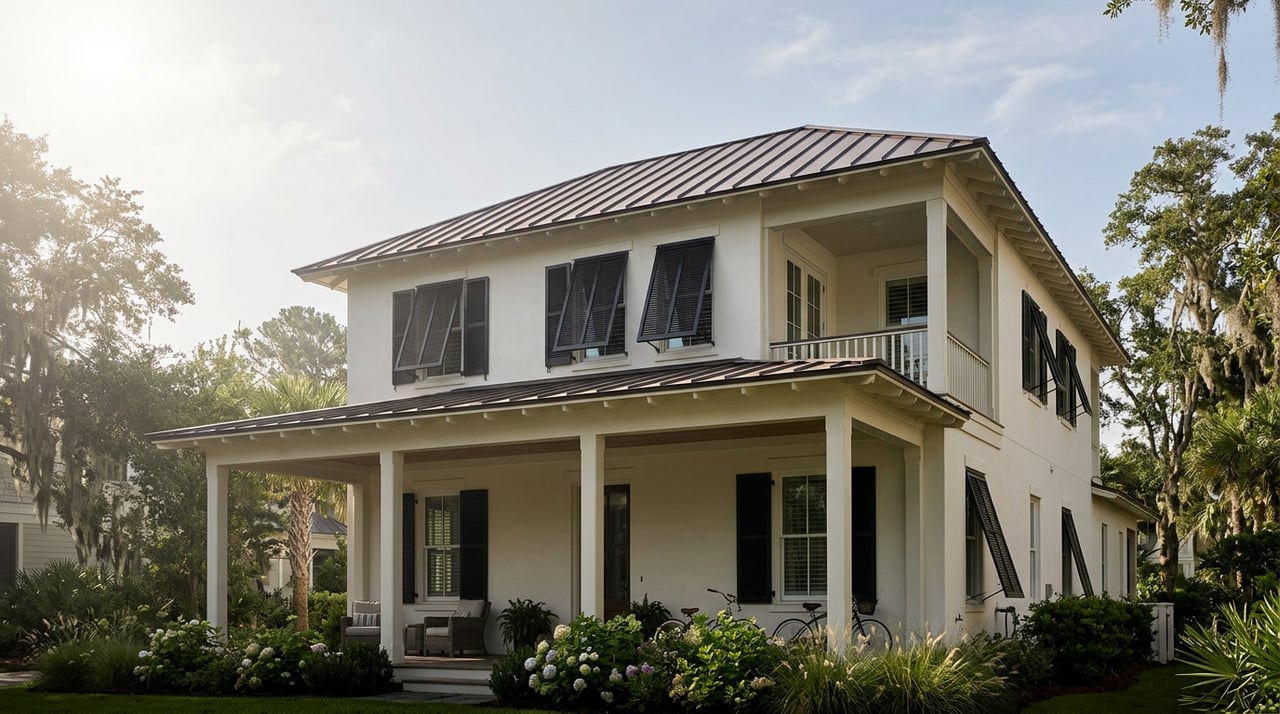
Walk down 8th Avenue in Pass-a-Grille this month and you'll pass a French bistro that didn't exist a year ago, a fine dining room finishing buildout inside a boutique hotel, and an 88-year-old diner that reopened its doors back in February. Walk two blocks over to the shuffleboard courts and you'll find an empty concrete pad where a clubhouse used to stand. Head to the Seventh Avenue pier and the fencing is still up.
Same two hurricanes. Same two years. Two completely different recovery speeds, with private businesses and public projects moving through different processes.
What came back, and how fast
The Tampa Bay Times reported that the Seahorse Restaurant at 800 Pass-a-Grille Way reopened on February 6, 2026, after more than a year of rebuilding following the 2024 storms. The interior work was extensive enough that regulars posted about recognizing the restored booths and wood paneling on their first visit back; the restaurant has served breakfast in the same spot since 1938.
St. Pete Rising reported that the space formerly occupied by Paradise To Go became Cafe Riviera, a full-service French bistro and bakery with an open kitchen. Owner Veronica Alfonzo opened it at 116 8th Avenue this spring, next to Grace. This was a new restaurant, not a reopening, in a corridor also affected by the storms.
TBN Weekly reported that developer John Dashiell won approval from city commissioners in December 2025 for a three-story, 159-seat restaurant with open-deck dining on the second and third floors, built to echo the historic character of the surrounding Eighth Avenue district. The report also said the vice mayor praised it as the kind of building that should have been there all along.
And by September, the corner at 109 8th Avenue inside the Berkeley Beach Club hotel is set to open as a new seafood-focused restaurant from the ownership team behind two established Tampa Bay restaurants. It takes over a space that sat empty since the 2024 storms, when the previous tenant there was damaged and never reopened.
Four addresses. Four private projects. Each had moved forward within about two years of the storms that damaged them.
Public projects still in progress
Now the other side of town, or really, the other side of the same few blocks.
The Merry Pier Bait Shack, a longtime fixture at the base of the pier, was approved for rebuilding by city commissioners in January 2026. Approved, but not resolved. The city set aside more than $144,000, and as of that vote, the actual project cost was still being worked out. One resident summed up the frustration to a local news crew: people had lived in Pass-a-Grille for years and still didn't know what was happening down at the docks.
The shuffleboard clubhouse tells a longer and stranger story. The historic building, originally a beach shelter barged over from Gulfport in the 1920s, was substantially damaged in the storms. The city's first instinct was to repair it for $192,000. That got shelved. Then came a plan to relocate a donated 1925 home fifteen blocks to serve as the new clubhouse, a gesture with real sentimental weight since the house once belonged to a former Pass-a-Grille mayor who had also served as shuffleboard club president. That plan collapsed too, once the moving and renovation costs climbed to an estimated $652,000. In February 2026, a backhoe demolished the original building. Club president John Gustafson managed to save one window before the crew arrived.
The timeline, laid out plainly, looks like this:
| Date | Decision |
|---|---|
| Spring 2025 | Repair estimate comes in at $192,000, deemed too costly |
| Nov 2025 | City considers relocating a donated 1925 home as replacement, est. $162,000 to move |
| Jan 2026 | Relocation plan scrapped after full cost estimate reaches $652,000 |
| Feb 2026 | Original historic clubhouse demolished |
| Jun 2026 | City issues RFP for new pavilion-style clubhouse, budget $170,000 |
When the city released its request for proposals in June, the shuffleboard club's own members pushed back publicly. Spectrum News reported that club member Alan Stalb said:
"An open pavilion just doesn't work for us. It may keep us out of the rain, if the wind isn't blowing, but that's about it."
Commissioner Jon Maldonado said staff had been given guidance from three meetings with club members: storage and a restroom, in that order of priority. The club says the final design did not fully reflect that guidance. As of this writing, the clubhouse project is still in progress, nearly two years after the storms that damaged the original building.
The Seventh Avenue pier's repair timeline
In an April 2026 report, Bay News 9 described the Seventh Avenue pier's repair as still in progress. Hurricane Helene buckled and popped planks on the pier back in September 2024. FEMA approved a $96,000 reimbursement, enough, according to city officials, to cover the repair. The pier itself was described as structurally sound, needing mostly cosmetic work.
In a May 2026 report, Bay News 9 said that the city had not yet filed the county permit required to start the repair. Commissioner Maldonado had told residents the previous week that the city was waiting on county approval; Pinellas County then confirmed no application had been submitted. He later clarified that he had confused a pending FEMA historical review with the county process. Underwater inspections, a prerequisite for the permit, were scheduled for the following weeks.
Bay News 9 quoted resident Jeff Catanzarita, who lives near the pier:
"We can't ever really get a solid answer like 'this is going to happen at such and such a day. You can count on that.' We don't get that."
Maldonado's target at the time was the August or September window of 2026. Whether that held is genuinely unclear as of this writing. No follow-up report has confirmed a reopening date, and the most recent public information still shows the pier closed.
Why the split isn't really about money
It would be easy to assume the restaurants moved faster because private owners have deeper pockets. That's not quite what the record shows. The pier's FEMA reimbursement covered its repair cost. The shuffleboard clubhouse had its full $170,000 allocated well before the design fight started. Money wasn't the bottleneck in either case.
The difference lies in the processes. Restaurant owners make decisions through their own insurance and building-review processes. Public projects in a historic district involve commission votes, community meetings, and choices about historic character. Those steps can make the path from a stated need to a final design less direct.
That's the actual mechanism behind what looks, from a distance, like uneven recovery. It isn't uneven. It's two different systems making decisions at two different speeds, and Pass-a-Grille happens to be small enough that you can watch both systems work in real time, one block apart.
What this means if you live here
If you're planning a fall evening out, the restaurant map has genuinely changed since last year. Seahorse is back for breakfast and lunch. Cafe Riviera adds a full-service option that wasn't there before. The new build at 804 Pass-a-Grille Way is moving toward construction. And by the time the weather cools off, there should be a new seafood room inside the Berkeley Beach Club worth walking over for.
If you're headed to the docks expecting the bait shack or planning a shuffleboard match, temper your expectations. The bait shack and clubhouse projects are funded and in progress, with timelines shaped by public review. The pier's previously announced August-or-September 2026 target had not been confirmed as of this writing. It would be reasonable to check current status before making plans around it rather than assuming a specific reopening date holds.
Pass-a-Grille isn't recovering unevenly because parts of it are being neglected. It's recovering the way any small town does when private capital and public process both start the clock on the same storm and run at their own natural speeds.
Harvey Petty has spent 25 years watching how neighborhoods like Pass-a-Grille rebuild, reopen, and change block by block. If you're thinking about what any of this means for a property you own here, or one you've had your eye on, reach out to Harvey Petty for a conversation grounded in what's actually happening on the ground, not just what the listing photos show.