"People act a little bit differently when they're on vacation. They're a little more boisterous, with worse behavior at times. That doesn't belong in our backyard."
The remark came during the January council debate. Murray has lived on Davis Islands for more than 30 years, a few steps from the Mirasol, and he was one of more than 100 residents, business owners and community members who showed up to a hearing that ran five and a half hours before the council voted 5-2 to deny a rezoning that would have turned the century-old building back into a hotel.
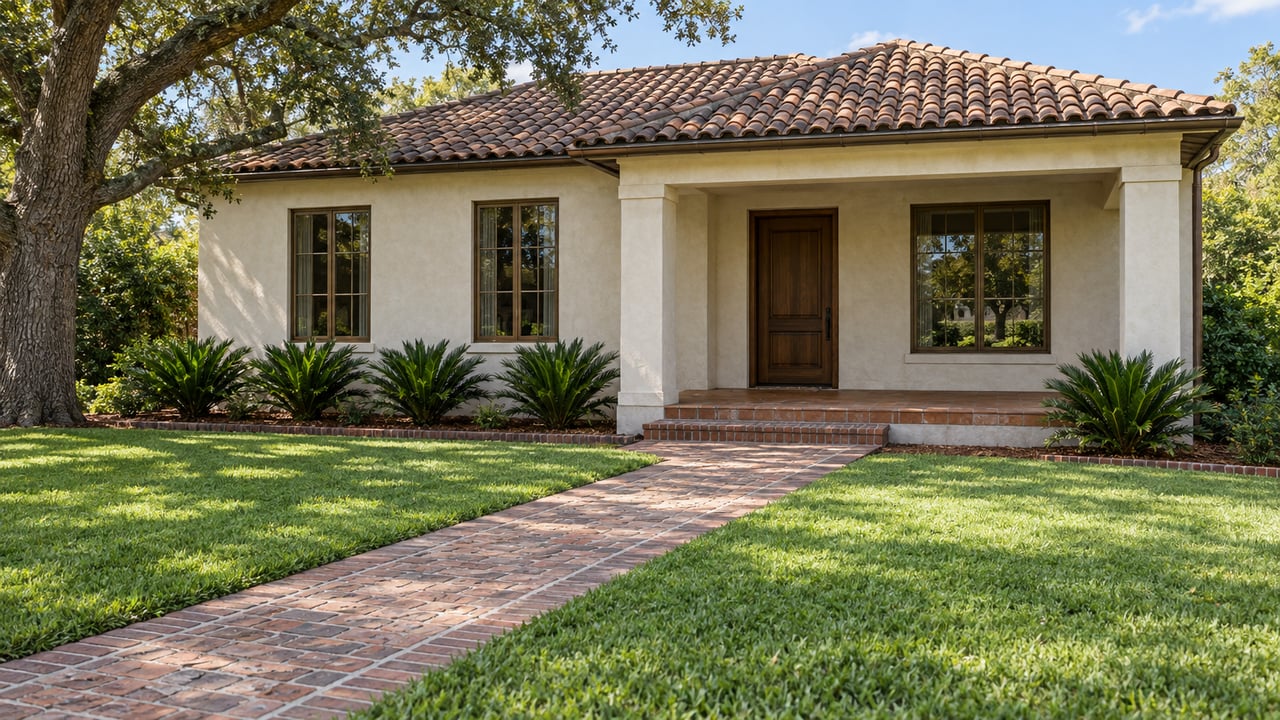
Walk East Davis Boulevard today and the building looks exactly like it did before that vote. Same 58 apartments. Same Mediterranean Revival facade designed by Miami architect Martin Hampton in 1926. Same waterfront courtyard and small private marina tucked behind it. The council's denial was framed, on both sides of the debate, as a decision about whether Davis Islands would stay a quiet, low-rise residential place or become something busier. Tampa Monitor reported that the existing R50 designation allows a higher residential density than the requested CMU35 designation.
What the Carrieras actually asked for
Frank and Lindsey Carriera, who own the Mirasol with a small group of investors, wanted to convert the building from its current 58 apartments into as many as 116 hotel rooms, add up to 12 condominium units on the north lot, and expand on-site parking. The Carrieras' requested rezoning would have changed the property's future land-use designation from R50, which allows 50 residential units per acre, to CMU35 at 35 units per acre.
The Mirasol was already operating as an apartment building. R50 on this lot works out to roughly 80 allowable residential units. The Carrieras' attorney, Tyler Hudson, told council members plainly that the more valuable path for the land was staying in R50, since that designation is what makes the site attractive for a denser luxury condominium project down the road, not the boutique hotel his clients were proposing.
Neighbors organized against the rezoning anyway, worried about traffic, noise and a use that would put overnight guests instead of full-time residents in the middle of a residential block. "Save Our Neighborhood" signs went up across front yards on the island in the weeks before the vote. Council member Lynn Hurtak's motion to deny passed 5-2, with Council Chair Alan Clendenin and council member Luis Viera voting against the denial. Clendenin told the room that Tampa "can't turn into a 100% residential city" and warned that blocking every path to reinvestment in an aging building can end in what he called demolition by attrition rather than intentional reuse.
The zoning comparison is:
| Residential density limit | |
|---|---|
| R50 (current, unchanged by the vote) | 50 units per acre (roughly 80 residential units on this lot) |
| CMU35 (what the Carrieras requested and lost) | 35 residential units per acre |
The vote left the Mirasol's R50 designation in place, which allows a higher residential density per acre than CMU35.
What actually changes on the block, and what doesn't
Nothing changes for anyone walking past 84 Davis Blvd this month. The building keeps operating as a 58-unit rental property, same as it has for decades, with studios, one, two and three-bedroom units, a villa and a penthouse. The Carrieras haven't walked away. Their Save the Mirasol campaign has continued to lay out what they call the building's "next chapter," describing a restored boutique hotel with a rooftop sky garden, a revived restaurant, a coffee bar, and two new low-rise wings, alongside infrastructure upgrades that would move critical systems out of the flood-prone basement. Frank Carriera said after the vote that the building remains "a rare and irreplaceable part of Tampa's history" and that its future "remains uncertain" without a viable financial path forward.
The vote leaves the building's future uncertain. The vote did not determine the Mirasol's long-term use. It left the R50 designation in place and denied the specific hotel plan that had been publicly reviewed. Whatever comes next for the Mirasol, whether that's another rezoning attempt, a straightforward apartment renovation, or eventually a denser residential redevelopment under the R50 designation that's already on the books, it will begin with the R50 designation still in place.
The block this argument happened on
The Mirasol sits at the edge of what locals call Davis Islands Village, the strip of East Davis Boulevard between Barbados and Biscayne where the neighborhood does most of its eating and errand-running. Oggi Italian, run by Joseph and Debra Ogston, has built a following on hand-pulled mozzarella and pasta made from scratch each morning. Spartaco's Kitchen, a family-run spot serving dishes from Italy's Emilia-Romagna region, opened a few doors down in 2024. DI Coffee Bar has anchored the same corner of East Davis for 11 years, popular enough that its owner opened a second location in Seminole Heights in April 2025. Anchor Tavern, Farrell's on the Island, Grecian Island Restaurant and Margarita's Mexican Restaurant round out a strip that residents reach on foot or by golf cart rather than by driving across the island, since Davis Islands has no traffic lights at all.
That's the texture the Mirasol fight unfolded inside of. It wasn't an abstract zoning argument fought at City Hall and forgotten. It was neighbors who eat at the same six or seven restaurants and walk the same curved, palm-lined streets deciding what kind of building they wanted anchoring the block where they already spend their evenings. The hearing ran long in part because that's a decision people who live somewhere small and walkable tend to have strong opinions about.
What to watch for next
The hotel proposal was denied. Their public statements since January do not suggest they have abandoned the idea entirely. One question is whether the R50 designation is later used for a denser condominium project, as Hudson said could happen, rather than for the hotel plan discussed at the hearing. A future condominium proposal under R50 could allow more residential units per acre than CMU35.
The building has outlasted a land bust, a world war, and nearly a century of Davis Islands turning over around it. It will likely outlast this fight too. Its future will depend on future proposals and the zoning that remains in place.
If you're weighing what a landmark like the Mirasol means for property values or future development on Davis Islands, Harvey Petty has spent 25 years watching how zoning decisions like this one play out across South Tampa's waterfront neighborhoods. Reach out for a conversation grounded in what's actually on the books, not just what got voted down.
This article is general information, not legal, tax or financial advice. Consult a qualified professional about your situation.